Choosing the right Trucker Hat Cap seems simple until the details become visible. Crown height, mesh quality, brim shape, closure type, and fabric weight can change comfort within minutes. A hat may look excellent online, yet feel stiff, loose, or poorly balanced in real use. That difference matters for retailers, promotional buyers, outdoor brands, and everyday wearers.
Industry data supports this growing attention to headwear. Grand View Research reports that the global headwear market is expected to expand steadily through 2030, supported by casual fashion, sportswear, and outdoor lifestyles. Its Headwear Market Size, Share & Trends Analysis Report highlights product design, material innovation, and changing consumer preferences as important growth factors. Circana’s consumer tracking also shows that shoppers increasingly evaluate apparel accessories through comfort, versatility, and perceived value. The figures are useful, but they do not replace touching the product.
A practical evaluation should begin with the wearer, not the logo. Will the Trucker Hat Cap sit comfortably during a long drive, a summer event, or a full workday? Check whether the front panel keeps its shape. Examine the mesh for airflow, rather than assuming every mesh back performs equally. Test the snapback adjustment with two fingers. Small details matter. I have found that attractive stitching cannot rescue an uncomfortable sweatband. There is also room for judgment. A premium fabric may improve appearance, but it can raise cost without improving daily performance. These seven tips will help compare construction, fit, breathability, durability, branding space, care needs, and overall value with clearer expectations.
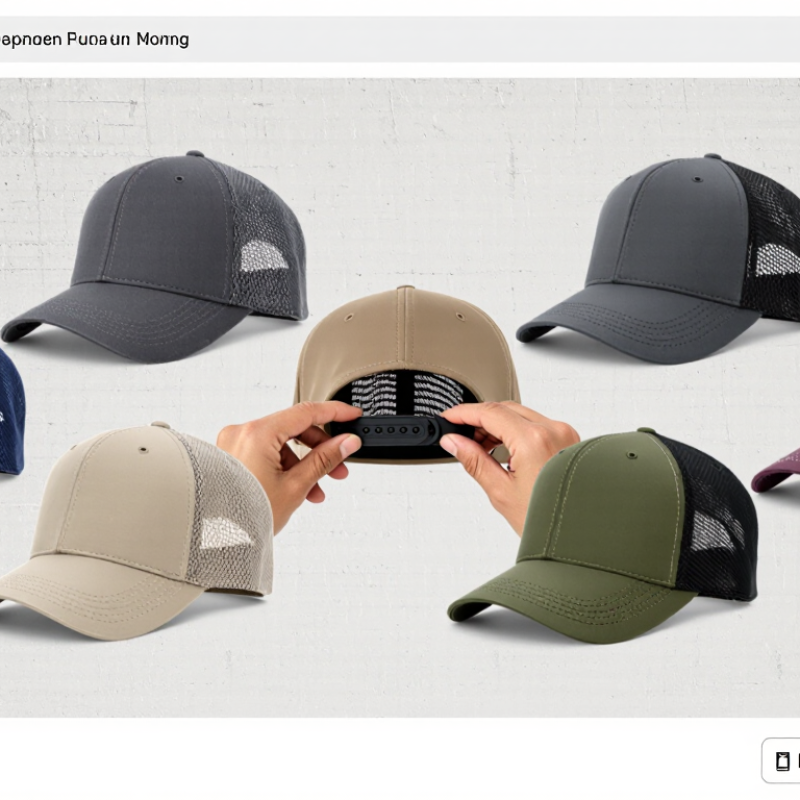
A trucker hat starts with its anatomy. Most classic designs use a five-panel crown, with seams shaping the forehead and side panels. The foam front creates a smooth, structured surface. The mesh back improves airflow, especially during long outdoor wear. The brim controls glare, but its curve also changes the hat’s visual balance. Grand View Research estimated the global headwear market at about USD 20.87 billion in 2023, showing strong demand for practical and expressive headwear.
Tip 1: Press the foam gently. It should feel firm, not brittle.
Tip 2: Check whether the five-panel seams sit flat against your head.
Fit depends on more than the adjustable closure. A snapback offers quick changes, while a fabric strap can feel softer and less rigid. The sweatband should absorb moisture without scratching the forehead. Foam can trap heat. Mesh can feel rough. Small details matter. The Outdoor Industry Association’s 2024 participation report continues to show strong interest in outdoor recreation, where ventilation and sun protection remain useful features.
Tip 3: Wear the cap for ten minutes before buying.
Tip 4: Look through the mesh under bright light. Large openings ventilate better, but may reduce structure.
Material claims need careful reading. Textile Exchange reported that polyester represented roughly 57% of global fiber production in 2023. Therefore, many mesh backs use synthetic fibers. Recycled content can help, but it does not automatically mean better durability.
Tip 5: Inspect stitching around the brim and closure.
Tip 6: Choose a crown height matching your head shape.
Tip 7: Consider sweat, storage, and washing habits.
I still find some stylish caps uncomfortable after one hot afternoon. That mistake is easy to repeat.
7 Tips to Choose the Best Trucker Hat Cap
Measure Head Size: Compare the Common 54–61 cm Adult Hat Range
Choosing a trucker hat should begin with an accurate head measurement. Use a soft measuring tape around the widest part of your head, about one centimeter above your eyebrows and ears. Keep the tape level, but do not pull it tightly. Record the result in centimeters, then measure again. Small errors can change the fit.
Most adult hats cover approximately 54–61 cm, but this range is only a practical guide. A 54 cm head may need a smaller adjustment, while a 61 cm head usually needs the cap opened wider. Hair thickness, crown depth, and the sweatband can also affect comfort. An adjustable back helps, but it cannot fix a shallow crown or a tight front panel.
Tips: Check your measurement in the afternoon, when head size may vary slightly. Try the hat with your usual hairstyle. The front should sit above your eyebrows without pressure, and the mesh should not leave deep marks. Leave a little breathing room. I once measured too tightly and chose a smaller cap; after an hour, the pressure became obvious. That mistake reminded me that comfort matters more than a perfect number. If your measurement falls between sizes, compare the adjustment range and crown shape carefully. Some sizing charts are imperfect, so treat them as guidance rather than proof.
| Tip | Selection Dimension | Reliable Data or Standard | How to Check It | Best Choice Guidance | ||||||||||||||||||
|---|---|---|---|---|---|---|---|---|---|---|---|---|---|---|---|---|---|---|---|---|---|---|
| 1 | Measure Head Size |
The common adult hat range is approximately 54–61 cm
(about 21.26–24.02 in).
Hat sizing can vary by design and manufacturer.
|
Wrap a flexible tape around the widest part of the head, about 1–2 cm above the eyebrows and just above the ears. Keep the tape level and comfortably snug. Measure twice. | Choose a cap whose adjustable range includes your measurement. If your measurement falls between sizes, select the larger option when a relaxed fit is preferred. | ||||||||||||||||||
| 2 | Check the Adjustment System | Trucker hats commonly use a rear snap closure, but a hook-and-loop strap, buckle, or stretch panel may also be used. The usable range is determined by the number of adjustment positions and the construction of the hat. | Fasten the closure at the middle position and confirm that it can become both tighter and looser without pressing into the head. | Choose a wider adjustment range for shared use or uncertain sizing. A secure closure should hold the cap in place without causing pressure around the temples. | ||||||||||||||||||
| 3 | Select the Crown Profile | Crown profiles are generally described as low, mid, or high. A higher crown provides more vertical room, while a lower crown sits closer to the head. “Five-panel” and “six-panel” describe construction rather than exact fit. | Compare the crown height with the natural shape of your head. Check whether the front panel wrinkles, collapses, or leaves excessive empty space. | Choose a mid-profile crown for a balanced everyday fit. A higher profile may suit taller head shapes or people who prefer more room above the forehead. | ||||||||||||||||||
| 4 | Evaluate the Brim | A curved brim generally provides a traditional casual appearance, while a flat brim offers a straighter, more structured look. The brim should shield the eyes without blocking normal vision. | Put on the cap and look straight ahead. Make sure the brim does not touch your eyebrows, obstruct your view, or feel unbalanced when you turn your head. | Select a curved brim for everyday outdoor use and a flat brim when a more structured style is desired. A moderately firm brim is easier to reshape and maintain. | ||||||||||||||||||
| 5 | Consider Ventilation | Mesh rear panels improve airflow compared with fully solid panels. Breathability also depends on the fabric, lining, sweatband, panel construction, and climate. | Inspect the mesh for open, even ventilation areas and check that the inner sweatband does not completely block airflow around the forehead. | Choose a larger mesh area for hot or humid conditions. For cooler weather or stronger wind protection, a more substantial fabric construction may be preferable. | ||||||||||||||||||
| 6 | Review Fabric and Care Requirements | Cotton is commonly comfortable and absorbent but may shrink or wrinkle if washed improperly. Polyester is often more resistant to shrinking and dries faster. Blended fabrics combine selected properties of both. | Read the care label and check whether the brim contains a material that could deform during machine washing. Look for colorfastness and seam quality. | Choose quick-drying fabric for active outdoor use. Select a softer natural-fiber blend when comfort is more important than rapid drying, and follow the care instructions to preserve the shape. | ||||||||||||||||||
| 7 | Match the Hat to the Intended Activity | Outdoor use may require ventilation, a stable fit, sun coverage, and durable stitching. Casual indoor use allows greater flexibility in structure, material, and brim design. | Consider expected exposure to sunlight, wind, sweat, moisture, and repeated adjustment before choosing the construction. | For active outdoor wear, prioritize a secure closure, breathable panels, a stable brim, and easy-care fabric. For occasional casual wear, prioritize comfort, appearance, and adjustability. |
7 Tips to Choose the Best Trucker Hat Cap?
Assess airflow before judging style. A cap with open mesh panels can release heat around the crown, especially during driving, hiking, or outdoor work. The U.S. Environmental Protection Agency’s Climate Change Indicators report shows that annual heat waves increased from about two in the 1960s to around six in the 2020s. That trend makes ventilation more than a comfort detail. It deserves careful attention.
Look for mesh made with breathable, moisture-resistant fibers, such as carefully engineered polyester blends. Polyester can move sweat away from the skin, but fiber quality and fabric construction still matter. Cheap mesh may feel airy in a store and become clammy after an hour outside. Test the cap personally. Wear it for fifteen minutes. Notice whether the forehead band stays damp, whether air reaches the crown, and whether the panels collapse against your head.
Technical testing can improve your judgment. ASTM D737 measures fabric air permeability, while AATCC TM195 evaluates moisture movement, spreading, and drying behavior. Ask suppliers for recent test results, not vague “quick-dry” claims. A moisture-resistant finish may also weaken after repeated washing, which many product descriptions ignore. I would choose moderate structure, generous mesh coverage, and a washable sweatband. More mesh is not automatically better; exposed gaps can reduce durability and sun protection. Check the trade-off honestly.
Moisture regain indicates how much moisture a fiber absorbs under standard atmospheric conditions. Lower values generally support faster drying, while mesh construction and open area determine actual airflow.
When selecting a breathable trucker hat, look for open mesh panels made with moisture-resistant fibers such as polyester or polypropylene. Also check the mesh openness, yarn structure, lining, and sweatband because fiber moisture regain alone does not measure total cap ventilation.
When choosing a trucker hat, inspect sun protection before color or decoration. A UPF 50+ rating means the fabric allows no more than 1/50 of ultraviolet radiation through. That equals at least 98% UV blockage. Look for this rating on the product label, not only in online descriptions. Reliable manufacturers should support the claim with standardized textile testing.
I learned this during long outdoor walks. The dense front panel protected my forehead well, but the open mesh sides exposed my scalp to direct sunlight. Mesh improves airflow, yet it may provide weaker UV coverage. Choose a tightly woven front panel and a brim measuring about 7 centimeters or more. The brim should shade your eyes, nose, and upper cheeks without blocking your view.
Fit also affects protection. A loose cap can lift in wind, leaving the hairline uncovered. A very tight cap can cause pressure and frequent adjustment. Check the fabric after washing, because stretching, thinning, or fading may reduce its original performance. I once trusted a dark-colored hat too much; color alone does not prove strong UV protection. UPF 50+ fabric still works best with sunscreen, sunglasses, and sensible breaks from direct sunlight. Safety claims deserve checking.
Durability starts with the brim. Hold the cap at eye level and compare both sides against its centerline. A strong brim should return to shape after gentle flexing. Watch for ripples near the stitching. They often signal weak reinforcement. Textile Exchange’s 2024 Materials Market Report recorded 124 million tonnes of global fiber production in 2023. Polyester represented 57 percent, but fiber choice alone cannot prove durability.
Inspect the sweatband and crown seams closely. Dense, even stitches leave fewer visible gaps. Pull the fabric lightly; loose loops or popping threads are warning signs. ASTM D1683/D1683M evaluates sewn seam strength, while ISO 12947-2 measures abrasion resistance through Martindale testing. Ask suppliers for actual test results, not vague claims. A test report should identify the fabric, method, and failure point. Otherwise, comparison becomes guesswork.
The closure deserves a practical check. Adjust snaps or straps repeatedly and look for cracking, distortion, or weak attachment points. The cap should stay secure without forcing the closure. I once trusted a firm-looking snap and ignored its thin base. That was a mistake. Hook-and-loop closures also need clean stitching around their edges. Small details matter. My own inspection is imperfect, because wear depends on sweat, washing, storage, and daily use. Still, a straight brim, tight seams, and a reinforced closure provide stronger evidence than appearance alone.
A typical cap has a five-panel crown, foam front, mesh back, brim, sweatband, and adjustable closure. The foam creates structure. The mesh improves airflow.
Wear the cap for about ten minutes. The seams should lie flat, without pressure near your forehead. A loose cap may expose your hairline.
A snap closure adjusts quickly but can feel rigid. A fabric strap usually feels softer. Check both options for secure attachment and smooth adjustment.
Not always. Open mesh improves ventilation but may expose your scalp to sunlight. Choose a tightly woven front panel and a brim around seven centimeters wide.
UPF 50+ means the fabric blocks at least 98% of ultraviolet radiation. Check the sewn label, not only online descriptions. Keep using sunscreen and sunglasses.
Hold the cap at eye level. Compare both sides with the centerline. Gently flex the brim, then watch for ripples or permanent bending.
Look for even, dense stitches around the brim, crown, sweatband, and closure. Loose loops and popping threads suggest weaker construction. Tiny gaps matter.
No. Many mesh panels use synthetic fibers, but fiber content alone proves little. Inspect stitching, test closure strength, and request specific wear-test information when available.
Check whether washing stretches, thins, or fades the fabric. Store the cap without crushing its brim. My judgment is imperfect; one hot afternoon can reveal hidden discomfort.
Choosing the right Trucker Hat Cap starts with understanding its basic construction. Most designs feature a five-panel crown, a structured or semi-structured foam front, and a mesh back for ventilation. Measure your head carefully and compare the result with the common adult range of 54–61 cm to find a secure, comfortable fit. The adjustable closure should sit firmly without creating pressure or leaving excessive looseness.
Next, evaluate performance and long-term quality. Look for breathable, moisture-resistant mesh fibers that encourage airflow during warm activities. For stronger sun protection, select materials rated UPF 50+ and capable of blocking at least 98% of ultraviolet radiation. Finally, inspect the brim for a stable shape, examine the seams for consistent stitching density, and test the closure for strength. A well-made Trucker Hat Cap should combine comfort, ventilation, reliable coverage, and durable construction for regular everyday use.