Choosing the right China-based supplier requires more than comparing prices and product photos. This guide explains how to evaluate a reliable Designer Bucket Hat manufacturer through practical, verifiable details. Experience matters here. A polished catalog may hide inconsistent stitching, weak fabric recovery, or unclear production timelines.
Look closely at material options, including cotton twill, recycled polyester, nylon, and blended fabrics. Ask for fabric weight, color references, shrinkage results, and washing instructions. A dependable supplier should provide clear samples before bulk production begins. Check the brim’s shape, crown structure, eyelet placement, sweatband comfort, and embroidery accuracy. Small details matter.
Request factory photographs, production records, quality-control procedures, and relevant business certifications. These documents do not prove everything, but they support a more informed decision. Confirm minimum order quantities, sample fees, payment terms, packaging standards, and shipping responsibilities in writing. Communication speed is useful, although fast replies do not always indicate strong manufacturing ability.
Inspect samples under natural light. Test the hat after folding, gentle washing, and repeated adjustment. Some suppliers may promise perfect color matching, yet slight differences can appear between samples and bulk orders. That risk deserves discussion, not blind trust. An independent inspection can add confidence before shipment.
The “best” supplier depends on your design, budget, market, and required delivery schedule. No factory fits every project. This guide offers a practical framework for comparing Chinese suppliers and reducing avoidable mistakes. It also encourages careful questions, because reliable sourcing is built through evidence, patience, and ongoing communication.
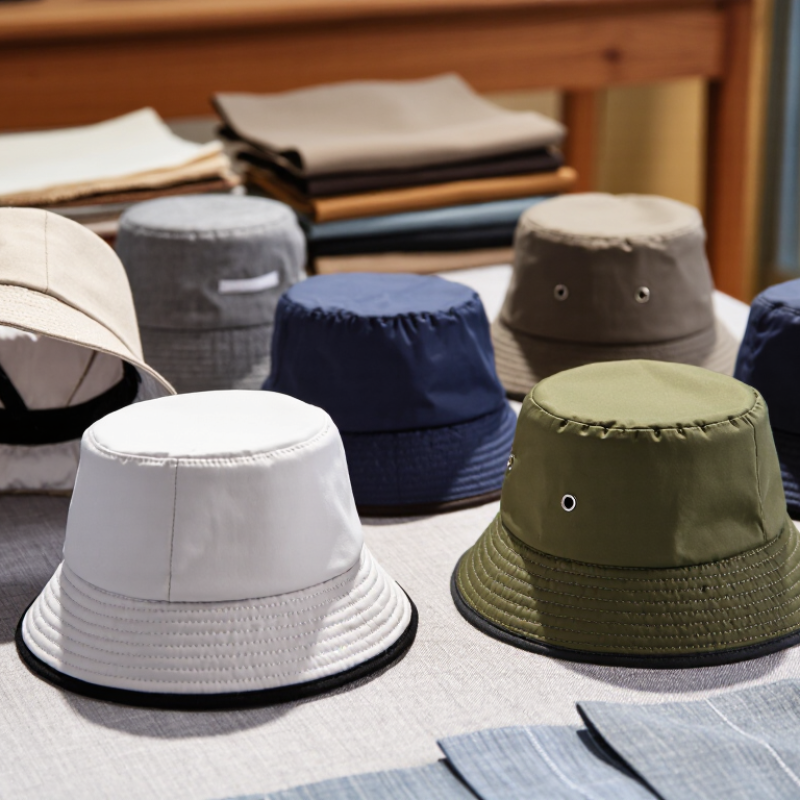
China Best Designer Bucket Hat Supplier Guide
What Defines a Reliable Designer Bucket Hat Supplier in China
A reliable designer bucket hat supplier shows more than attractive product photos. During supplier evaluations, inspect fabric samples, stitching density, brim recovery, and color consistency. Ask for a physical sample before approving bulk production. Photos can hide uneven seams.
Material details should be written clearly. Check fiber content, fabric weight, lining, sweatband, shrinkage, and colorfastness records. A professional supplier explains testing methods instead of making vague promises. Small details matter. The inner label should remain neat after washing.
Factory experience also appears in its questions. A capable team confirms measurements, artwork placement, packaging, delivery dates, and acceptable defects. Request a production timeline with inspection points. Reliable factories normally welcome third-party quality checks and provide batch records.
Communication is another useful signal. Replies should be specific, consistent, and supported by updated images or sample notes. However, fast replies do not always mean strong production control. I have seen promising samples followed by weaker bulk workmanship. That risk deserves attention. Start with a modest order, document every requirement, and compare the finished hats against the approved sample. Suppliers handling export documentation, workplace standards, and product testing responsibly are generally safer long-term partners. Yet no supplier is perfect, so regular inspections remain necessary.
| Evaluation Dimension | Recommended Benchmark | What to Verify | Why It Matters | Suggested Weight |
|---|---|---|---|---|
| Manufacturing Experience | At least 3 years of relevant hat or headwear production experience | Factory profile, production records, product development examples, and customer references | Relevant experience generally improves pattern accuracy, process control, and problem-solving ability | 15% |
| Custom Design Capability | Ability to develop custom patterns, panels, brims, labels, trims, and packaging | Technical drawings, sampling workflow, material cards, and revision procedures | Designer bucket hats often require unique silhouettes and detailed finishing rather than standard catalog styles | 15% |
| Material Selection | Access to cotton, recycled polyester, nylon, canvas, denim, wool blends, and specialty fabrics | Fiber composition, fabric weight, colorfastness, shrinkage, hand feel, and compliance documents | Fabric choice affects comfort, shape retention, appearance, durability, and product positioning | 12% |
| Sample Development | A defined sample process with measurable review and revision stages | Sample lead time, pattern revisions, approval records, and pre-production confirmation | A controlled sample process reduces the risk of incorrect fit, color, construction, or decoration | 12% |
| Quality Control | Inspection at incoming-material, in-process, and final-production stages | Inspection checklist, measurement tolerances, defect classification, and corrective-action records | Multi-stage inspection helps identify stitching, shape, decoration, and measurement problems before shipment | 15% |
| Decoration and Finishing | Stable support for embroidery, screen printing, woven labels, patches, metal details, and washing effects | Decoration samples, placement specifications, wash testing, color references, and attachment strength | Visible finishing details strongly influence the perceived quality of a designer accessory | 10% |
| Minimum Order Quantity | MOQ should match the buyer's launch volume; negotiate by color, fabric, and design complexity | MOQ per style, color, size, material, and decoration method, including sample-order terms | Flexible order policies can reduce inventory exposure for testing or limited collections | 8% |
| Production and Delivery Lead Time | Clear timelines for sampling, bulk production, inspection, and shipping | Written production schedule, capacity during peak periods, shipment history, and delay procedures | Reliable scheduling supports seasonal launches, retail deliveries, and inventory planning | 8% |
| Compliance and Testing | Willingness to provide applicable material and product compliance documentation | Restricted-substance declarations, test reports, social-compliance records, and destination-market requirements | Documentation helps manage regulatory, safety, environmental, and retailer-specific requirements | 8% |
| Communication and Transparency | Prompt, consistent, and document-based communication throughout the order cycle | Quotation detail, material disclosure, change notifications, production updates, and issue escalation process | Transparent communication reduces misunderstandings involving specifications, costs, and deadlines | 7% |
| Total Evaluation Weight | 100% | |||
Measure crown height, brim width, stitching density, and fabric recovery by hand. A 58-centimeter sample should match its specification closely. Looks can mislead.
It records fabric weight, lining, seam construction, embroidery limits, and color matching methods. Request artwork templates and label placement diagrams.
Support may include woven labels, care labels, hangtags, tissue paper, and customized cartons. Confirm placement before production starts.
Request a live video audit, dated workshop videos, and recent inspection records. Check cutting tables, embroidery machines, storage areas, and unfinished samples.
No. Production capacity supports variety and pricing, but it does not prove consistent workmanship. Evidence matters more than scale.
Ask for separate costs for fabric, labor, embroidery, labels, packaging, tooling, inspection, and freight. Compare delivery terms carefully.
You may notice slight brim waviness, loose threads, or minor color variation. One flaw is not automatic failure. It is useful evidence.
Use a paid sample and approve a pre-production sample before cutting. Record every change in a signed sample sheet.
Not automatically. A low price may hide thinner fabric, rushed sewing, or weaker inspection. I would question that shortcut.
Define measurement tolerance, defect standards, corrections, replacement terms, and approval procedures. Informal conversations can become expensive.
Finding the right China supplier for a Designer Bucket Hat requires more than comparing prices. A reliable partner should demonstrate consistent materials, precise stitching, strong shape retention, clean finishing, and clear production standards. Buyers should assess the supplier’s experience, factory capabilities, communication, and ability to provide custom designs, woven labels, embroidery, color options, and private label packaging. Reviewing samples before production is essential for confirming fabric quality, sizing, construction, logo placement, and overall appearance.
A professional sourcing process should include transparent quotations, reasonable minimum order quantities, clear payment terms, and an agreed production schedule. Buyers should also understand how inspections, defect handling, packaging, carton protection, and export documentation are managed. By verifying samples, reviewing quality control procedures, confirming customization details, and maintaining written specifications, businesses can reduce production risks and build a dependable supply relationship for high-quality Designer Bucket Hat orders.