Buying Custom Baseball Caps in bulk looks simple until quality, sizing, branding, and delivery deadlines collide. A cap may appear inexpensive on a quotation, yet embroidery limits, fabric weight, artwork revisions, and carton charges can quickly change the final cost. This guide, “10 Tips for Buying Custom Baseball Caps in Bulk,” examines those details before they become expensive surprises.
Industry research supports careful planning. Grand View Research’s Headwear Market Size, Share & Trends Analysis reports continued growth in global headwear demand, driven partly by fashion, sports, and promotional use. The Advertising Specialty Institute’s Global Advertising Specialties Impressions Study also shows that logoed headwear can create thousands of brand impressions during its usable life. Exposure matters. However, impressions do not guarantee campaign success. A poorly fitted cap can remain in a warehouse, unnoticed and unused.
The strongest buying decisions connect design with actual wearing conditions. Consider outdoor sunlight, sweat, adjustable closures, crown shape, and embroidery placement. Cotton may feel familiar, while performance polyester can suit active events better. Small details matter. A two-millimeter logo shift can affect the whole appearance. Supplier reliability deserves equal attention, including sample approval, production photographs, inspection standards, and shipping timelines. Reports provide useful direction, but they cannot replace physical samples or clear communication. That is where buyers sometimes make mistakes. This outline offers practical checkpoints for comparing suppliers, controlling costs, and ordering caps that people will genuinely wear.
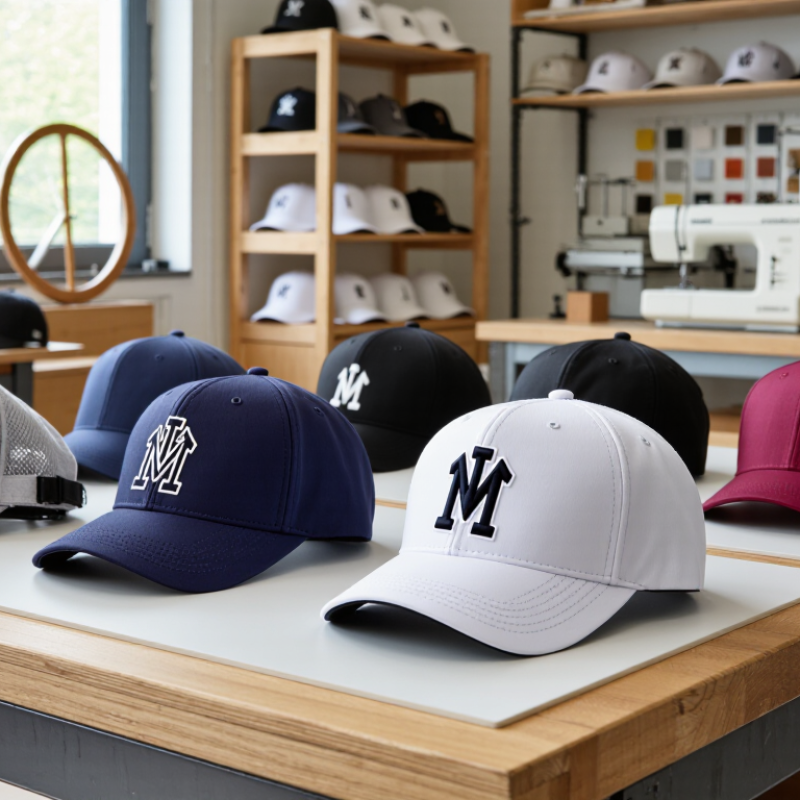
Define the purpose before choosing fabric, color, or quantity. A cap for a school tournament needs a different design than one for daily staff wear. Identify the audience’s age, activity level, climate, and usual clothing. PPAI’s 2024 sales data places apparel among the largest promotional-product categories, representing roughly one-quarter of industry revenue. That demand reflects visibility, but visibility only matters when people willingly wear the cap. I have seen teams order attractive samples that felt too hot during outdoor events. The design was fine. The use case was wrong.
Tip: Write a one-sentence brief. Include the event, wearer, location, and expected wearing time. Then select a structured or unstructured crown, adjustable closure, and breathable fabric. ASI’s 2024 Ad Impressions Study identifies wearable products as strong repeat-exposure tools because recipients can use them in public. Still, impressions are not guaranteed. A crowded front panel, weak contrast, or oversized logo can reduce actual wear.
Tip: Separate audiences when their needs differ. Players may prefer moisture control and secure closures, while spectators may value comfort and easy adjustment. Request physical samples before approving a bulk order. Check stitching, sweatband softness, embroidery density, and color under outdoor light. Leave room for revision. A small sample mistake becomes expensive at scale, and hindsight rarely fixes a rushed purchase.
Set a Realistic Budget for Bulk Cap Purchases
When buying custom baseball caps in bulk, start with a complete cost estimate. The unit price is only one part of the budget. Ask for separate figures for cap blanks, embroidery, labels, packaging, setup, sampling, and freight. A quote that looks affordable can change after artwork adjustments or shipping fees appear.
Set a target price per cap, then calculate the full order value. For example, 300 caps at $6 each already require $1,800 before delivery. Add a 10% to 15% reserve for unexpected costs. This buffer can cover thread changes, extra samples, or damaged units. It may feel excessive, but small charges accumulate quickly.
Do not choose the largest quantity automatically. A higher order volume may reduce the unit price, yet unsold caps can trap your cash. Review your sales history, event attendance, or staff requirements before confirming the quantity. I have seen buyers save a few cents per cap but spend months storing excess inventory. That decision needs honest review.
Request a written quotation with payment stages and production timelines. Confirm whether revisions, color matching, and quality checks are included. Keep money aside for a physical sample, even when digital artwork looks accurate. A screen cannot show fabric texture or embroidery density clearly. Inspect stitching, crown shape, brim alignment, and size consistency before approving production. Budget carefully, but leave room for one practical mistake.
Buying custom baseball caps in bulk starts with the intended use, not the artwork. Cotton offers a soft hand and casual appearance, while polyester dries faster during outdoor activities. Blended fabric can balance comfort, strength, and cost. Textile Exchange’s 2024 Materials Market Report states that polyester represented 57% of global fiber production in 2023. That scale improves availability, but it does not guarantee responsible sourcing. Ask for recycled-content evidence and test colorfastness before approving a large order. Test before scaling.
Match the cap structure to the wearer. Choose an unstructured crown for a relaxed look and a structured crown for sharper embroidery. Select a low profile for everyday comfort, or a deeper crown for better coverage. Compare hook-and-loop, metal, and snap closures for adjustability and durability. A curved brim suits casual use; a flat brim creates a more fashion-led silhouette. Add mesh panels for airflow, but inspect stitching around each panel. A moisture-wicking sweatband helps in heat, while a documented UPF rating supports outdoor use. The 2024 Circularity Gap Report measured the global economy at only 7.2% circular, so avoid treating recycled claims as automatic proof of sustainability. Request a preproduction sample, wash it, bend the brim, and check embroidery after drying. My own purchasing preference is simple: specify measurable features, not vague words like “premium.”
| Tip | Key Decision | Recommended Material | Suitable Cap Style | Functional Features | Advantages | Bulk-Buying Checks | Best Use Case |
|---|---|---|---|---|---|---|---|
| 1 | Match the material to the climate | Cotton Cotton blend | Unstructured 5-panel or 6-panel cap |
Soft hand feel Comfortable interior sweatband |
Breathable, comfortable, and suitable for everyday wear. | Confirm fabric weight, shrinkage control, colorfastness, and washing instructions. | Outdoor events, casual uniforms, community activities, and promotional programs. |
| 2 | Choose moisture management for active use | Polyester Recycled polyester | Performance 5-panel or athletic cap |
Moisture-wicking sweatband Ventilation panels |
Lightweight, quick-drying, and less prone to retaining moisture. | Ask for fabric composition, drying performance, seam quality, and ventilation placement. | Running events, sports teams, fitness programs, and summer campaigns. |
| 3 | Select a structured crown for a defined shape | Cotton twill Polyester twill | Structured 6-panel cap |
Front-panel support Curved or flat visor |
Maintains a consistent silhouette and provides a stable decoration area. | Check crown height, front-panel stiffness, visor alignment, and size consistency. | Uniforms, team apparel, retail-style merchandise, and formal promotional wear. |
| 4 | Use an unstructured crown for a relaxed fit | Washed cotton Cotton canvas | Unstructured 5-panel or 6-panel cap |
Low-profile crown Adjustable back closure |
Flexible, casual, and comfortable for extended wear. | Review crown recovery, seam finishing, brim flexibility, and fit measurements. | Lifestyle merchandise, casual staff apparel, festivals, and travel-related events. |
| 5 | Pick the closure according to fit requirements | Any suitable shell fabric | Adjustable strapback, hook-and-loop, or snapback |
Adjustable sizing Metal buckle, hook-and-loop strap, or plastic snap closure |
Accommodates different head sizes and reduces the need for multiple size ranges. | Check closure durability, adjustment range, comfort, and color matching with the cap. | Large events, mixed-audience giveaways, volunteer programs, and general promotions. |
| 6 | Choose a decoration method that suits the artwork | Cotton twill Polyester Canvas | Structured 6-panel or 5-panel cap |
Embroidery-ready front panel Flat print or heat-transfer compatible surface |
Allows logos, text, and graphics to be applied with different visual effects. | Approve a pre-production sample and check thread density, print adhesion, color accuracy, and placement. | Event identification, uniforms, school activities, club apparel, and merchandise. |
| 7 | Add sun-protection features for outdoor exposure | Polyester Cotton blend | Sport cap or extended-visor 6-panel cap |
Curved visor Dense weave, neck coverage option, or certified UV fabric |
Helps reduce direct sun exposure when the design provides adequate coverage. | Do not assume UV protection from color alone; request test documentation when protection claims are required. | Golf events, outdoor workwear, tourism programs, sports activities, and summer events. |
| 8 | Consider ventilation for hot conditions | Lightweight polyester Cotton mesh blend | Trucker cap or ventilated performance cap |
Mesh back panels Embroidered eyelets or laser-cut ventilation |
Improves airflow and can reduce heat buildup during outdoor use. | Inspect mesh strength, edge binding, airflow openings, and comfort around the ears and forehead. | Outdoor labor, sports tournaments, agricultural events, and warm-weather promotions. |
| 9 | Balance durability with the target budget | Cotton twill Polyester twill Cotton-polyester blend | Standard 5-panel or 6-panel cap |
Reinforced seams Durable visor and secure closure |
Provides practical wear resistance without requiring premium construction. | Compare total landed cost, sample approval, packaging, defect allowance, lead time, and reorder terms. | Large-volume giveaways, recurring campaigns, staff uniforms, and budget-conscious programs. |
| 10 | Verify quality before approving the full order | Material selected from approved sample | The final style specified in the approved sample |
Pre-production sample Measurement and inspection checklist |
Reduces the risk of inconsistent sizing, color variation, and decoration defects. | Confirm dimensions, color standards, decoration location, packaging, carton quantity, and inspection criteria in writing. | Every bulk order, especially customized orders with fixed delivery dates. |
When buying custom baseball caps in bulk, supplier evaluation should start with evidence, not attractive photos. Request business registration details, production capacity, material specifications, and recent quality records. PPAI’s 2024 sales report valued the promotional products industry at about $25.8 billion in 2023, showing strong competition and many inconsistent suppliers. Ask for two references.
Always approve physical samples. Check crown shape, panel alignment, stitching density, sweatband comfort, and closure strength. Measure the sample after washing. Small defects become expensive at scale. I learned this the hard way.
Printing requires a different inspection.
Screen printing should have sharp edges and even ink coverage. Heat-transfer graphics must resist peeling after repeated washing. Embroidery needs clean lettering, stable thread tension, and limited density. Fine details often disappear on curved panels.
Request a close-up photo and a wash-test report. The American Association of Textile Chemists and Colorists provides standardized colorfastness methods, which can support more reliable testing.
Grand View Research’s headwear market analysis also identifies customization as a continuing growth driver, increasing pressure on suppliers to deliver consistent decoration quality.
Do not trust one approved sample alone.
Inspect a pre-production sample, then require random checks before shipment. My own mistake was judging color under warehouse lighting; daylight exposed the mismatch.
10 Tips for Buying Custom Baseball Caps in Bulk
Confirm the landed price, not only the quoted unit price. Request embroidery, setup, sampling, packaging, freight, duties, and payment terms separately. PPAI’s 2024 sales report valued North American promotional products sales at $26.6 billion, showing how competitive this market has become. Competition does not remove hidden costs. Ask whether the price changes at 500, 1,000, or 5,000 caps. Request a written quote with currency, tax treatment, quote validity, and cancellation terms. Approve artwork dimensions, thread colors, cap fabric, closure type, and carton quantities before production.
Delivery details deserve equal attention. Require a production schedule with sample approval, manufacturing, inspection, and shipping dates. Add a buffer for port delays or artwork corrections. ASI’s 2023 Ad Impressions Study reported that promotional headwear can generate thousands of visual impressions, but poor stitching can damage that value quickly. Order a physical pre-production sample. Check the crown shape, brim alignment, thread tension, sweatband comfort, and color consistency under daylight. Use an agreed inspection method, such as ISO 2859-1 sampling, and define acceptable defect limits in writing.
Quality assurance should include random carton checks, measurement records, and photos before dispatch. Confirm replacement or credit procedures for shortages, stains, loose threads, or incorrect logos. A spreadsheet may miss real-world problems. Inspecting one approved sample is not enough. Keep a signed proof, purchase order, inspection report, and delivery receipt together. That paper trail feels tedious, but it prevents expensive arguments later.
Typical working-day benchmarks for confirming pricing, order details, delivery schedules, and quality assurance before placing a bulk order.
Use these practical planning benchmarks to compare quotations, confirm production milestones, approve samples, and allow enough time for inspection before shipment.
Include blank caps, embroidery, labels, packaging, setup, samples, freight, and possible revisions. Unit price alone misleads.
Keep a 10% to 15% reserve for thread changes, extra samples, damaged units, or unexpected shipping fees. Small charges accumulate quickly.
No. A lower unit price may leave you storing unsold caps for months. Review sales history, event attendance, and staff needs first.
Digital artwork cannot show fabric texture or embroidery density accurately. Inspect stitching, crown shape, brim alignment, and sizing before approval.
Cotton feels soft and casual. Polyester dries faster. Blended fabric may balance comfort, strength, and cost. Test colorfastness first.
Compare crown structure, profile depth, closures, brim shape, mesh panels, sweatbands, and documented UPF ratings. Avoid vague claims like “premium.”
Request registration details, production capacity, material specifications, recent quality records, and two references. Attractive photos are not enough.
Inspect print edges, ink coverage, peeling resistance, lettering clarity, thread tension, and embroidery density. Fine details may disappear on curved panels.
Not always. Request a pre-production sample and random inspections before shipment. Check colors in daylight, not only warehouse lighting.
Ask for recycled-content evidence and test the material. Recycled claims are useful, but they are not automatic proof of responsible sourcing.
Buying Custom Baseball Caps in bulk starts with a clear understanding of your purpose and target audience. Decide whether the caps are for team uniforms, company events, promotional campaigns, or retail sales, then select colors, designs, and sizes that match the intended use. Establish a realistic budget that includes cap costs, customization, samples, shipping, and possible setup fees. Consider materials, cap styles, closure types, ventilation, comfort, and durability before placing an order.
Choosing a reliable supplier is equally important. Request samples to evaluate fabric quality, stitching, fit, color accuracy, printing, and embroidery details. Compare suppliers based on communication, production capacity, customization options, and customer service rather than price alone. Before confirming the purchase, review the unit price, minimum order quantity, artwork requirements, production schedule, delivery terms, and payment conditions. A written quality assurance plan and final inspection process can help ensure that the finished caps meet your expectations and arrive on time.