China’s Custom Bucket Hats industry combines flexible production, advanced textile sourcing, and large-scale manufacturing experience. This guide examines ten manufacturers serving brands, retailers, event teams, and emerging designers.
The evaluation considers fabric quality, pattern accuracy, embroidery, printing, stitching, sampling, minimum order quantities, and delivery communication. It also reviews whether each supplier can provide clear product specifications, material details, and consistent quality control. These factors matter when a hat must survive sunlight, repeated folding, and regular washing.
Small details reveal much.
A clean brim curve can indicate careful construction. Even embroidery often reflects better machine calibration and inspection. However, factory websites rarely tell the whole story. Sample testing remains essential, especially for colorfastness, shrinkage, sweat absorption, and seam strength.
Stephen Jones OBE, a respected British milliner, once said, “A hat is an expression of identity.” That idea applies strongly to Custom Bucket Hats. A logo, contrast panel, recycled fabric, or special lining can turn a basic accessory into a recognizable brand asset.
Still, no supplier is perfect.
A manufacturer may offer excellent samples but slower bulk production. Another may quote competitively while providing fewer fabric choices. These trade-offs deserve honest attention. Buyers should request production photos, confirm inspection procedures, and clarify revision policies before placing large orders.
This overview is designed to support practical comparison rather than promote one automatic winner. Manufacturing capabilities change, and public information can become outdated. Direct verification remains necessary. With careful sampling and transparent communication, buyers can identify Chinese manufacturers that match their design goals, budget, and expected retail quality.
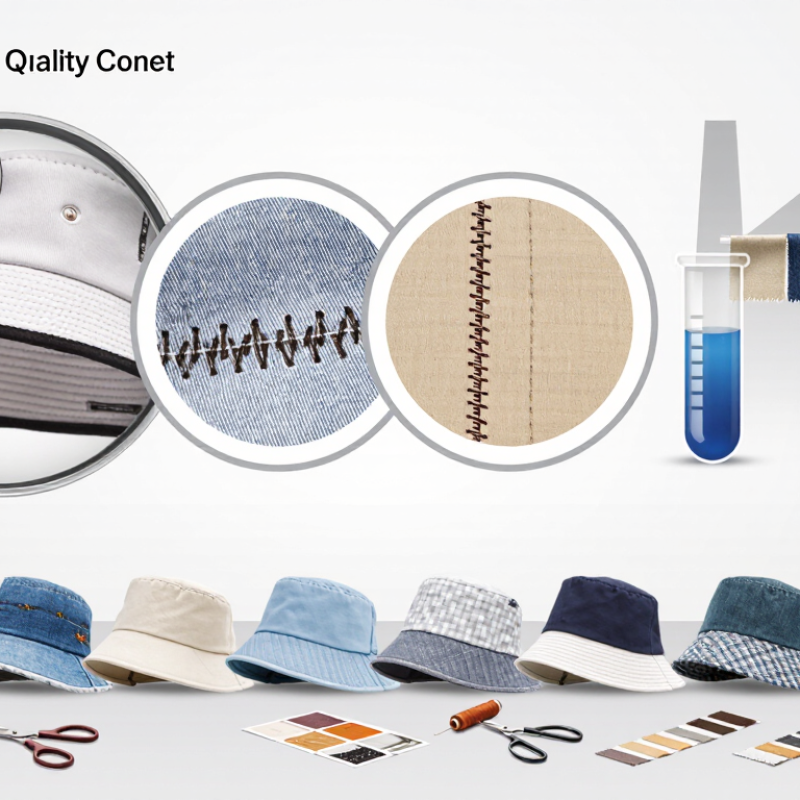
What Defines a Reliable Custom Bucket Hat Manufacturer in China
A reliable custom bucket hat manufacturer in China proves capability through repeatable production, not attractive samples alone. A strong factory should explain fabric weight, shrinkage control, seam allowance, brim stiffness, and color matching before quoting. The sample should survive washing, folding, and daily handling. Small details matter: a loose sweatband can ruin an otherwise excellent hat.
Production evidence matters too. The ISO Survey 2023 recorded more than 1.26 million ISO 9001 certificates worldwide. Certification does not guarantee perfection, but it suggests documented quality procedures. Ask for inspection records, corrective-action reports, and batch traceability. A dependable supplier can identify which fabric roll, sewing line, and inspection stage affected each order. That level of clarity is more useful than vague claims about advanced equipment.
Material knowledge also separates experienced manufacturers from trading companies. Textile Exchange’s Materials Market Report 2024 reported 124 million tonnes of global fiber production in 2023, with polyester representing about 59%. A responsible factory should disclose fiber content, recycled-material percentages, and test methods. It should also explain colorfastness and restricted-substance testing clearly. Production can still go wrong. Late fabric, uneven embroidery, or a distorted brim may appear despite approved samples. The manufacturer’s response reveals more than the original mistake. Look for fast communication, documented fixes, realistic timelines, and willingness to improve rather than defensive promises.
How the Top 10 Chinese Bucket Hat Manufacturers Compare
China’s top 10 custom bucket hat manufacturers differ more in execution than in catalog design. Grand View Research estimated the global headwear market at about USD 26.5 billion in 2023, with continued annual growth. This demand rewards factories that combine stable stitching, flexible minimum orders, and reliable sampling.
The strongest manufacturers usually offer cotton twill, recycled polyester, nylon, and water-resistant finishes. Some provide 3D embroidery, woven labels, screen printing, and laser-cut ventilation. Production capacity varies widely. Larger factories may handle 50,000 pieces monthly, while smaller specialists often deliver better attention to custom patterns. That trade-off matters. A high-volume supplier can reduce unit costs, but sample corrections may move slowly. Smaller workshops may respond faster, yet their quality systems can be less consistent.
The International Trade Centre’s trade data shows China remains a major global exporter of textile headwear under HS code 6505. However, export scale alone does not prove manufacturing quality. Audit records, fabric test reports, needle detection, and pre-shipment inspections provide stronger evidence. I have found that color matching often causes more delays than sewing. Pantone references help, but screen previews remain imperfect.
Tips: Request a physical sample before bulk production. Test brim recovery after folding. Check sweatband comfort, embroidery density, carton strength, and measurement tolerance. Ask for recent inspection results, not only factory photographs. Also compare landed cost, because shipping and packaging can change the cheapest quotation.
Key Customization Options and Production Capabilities
When comparing China’s top 10 custom bucket hat manufacturers, buyers should inspect more than catalog photos. Experienced teams discuss fabric weight, brim recovery, crown height, and stitching density before quoting. Cotton twill suits structured hats, while nylon or recycled polyester supports lighter outdoor styles. Ask for physical samples. Digital images hide puckering, shade changes, and weak seams. Small details matter.
Customization can include woven labels, embroidery, screen printing, rubber patches, contrast panels, eyelets, chin cords, and adjustable toggles. A reliable manufacturer confirms artwork size, thread colors, placement tolerances, and wash performance in writing. Production capability also matters. Check pattern development, cutting accuracy, embroidery capacity, heat pressing, quality inspection, and packaging control. A factory with in-house sampling usually corrects fit problems faster. However, “in-house” needs proof. Request a sample timeline and inspection photos.
For larger orders, confirm minimum quantities, material sourcing, lead times, and pre-shipment inspection procedures. Ask how rejected pieces are recorded and replaced. That answer reveals operational discipline. One useful test is a small pilot order with two fabric colors and one detailed logo. It exposes inconsistencies before full production. No supplier is flawless. I would still challenge unclear promises, because a low price can conceal weaker fabric or rushed finishing. A dependable partner reports limits early and adjusts the design with evidence, not optimism.
China Custom Bucket Hat Manufacturing: Production Timeline Benchmarks
Typical business-day ranges for key stages in a custom bucket hat order, including design, sampling, bulk production and final preparation.
Lead times vary with fabric selection, embroidery or printing complexity, custom labels, packaging requirements, order quantity and approval speed. These figures are general industry reference ranges rather than company-specific commitments.
Quality Control, Certifications, and Manufacturing Standards
When evaluating China’s top 10 custom bucket hat manufacturers, quality control should begin with material verification. Experienced factories test fabric weight, shrinkage, colorfastness, and tear strength before cutting. A sample hat should match the approved specification, including crown height, brim width, stitching density, and logo placement. Small differences become obvious in bulk production.
Reliable manufacturers normally operate documented quality systems, often aligned with ISO 9001. However, a certificate alone proves little. Buyers should verify its validity, issuing body, and production scope. Depending on the target market, compliance may also involve REACH, CPSIA, or textile safety requirements. OEKO-TEX or recycled-content certifications can support material claims, but only when the certificate covers the actual fabric used. Ask for current reports.
Inspection should continue during production. Inspectors can check fabric defects, loose threads, uneven embroidery, seam strength, and packaging accuracy. An agreed AQL standard creates measurable acceptance limits. Keep records. They reveal repeated problems.
No factory is flawless. Even careful teams may miss a crooked brim or shade variation. This is where corrective-action records matter. A serious manufacturer identifies the cause, adjusts the process, and confirms the result through another inspection. Factory visits, production photos, and independent testing add useful evidence. Trust grows from consistent records, not confident promises.
How to Choose the Right Chinese Bucket Hat Supplier
China Top 10 Custom Bucket Hat Manufacturers
Choosing a Chinese bucket hat supplier requires more than comparing catalog photos. Start with evidence. Request a business license, production address, workshop videos, and recent quality records. A reliable manufacturer should explain fabric weight, fiber content, brim structure, and available finishing methods clearly.
Ask for a physical sample before discussing large quantities. Check whether the crown keeps its shape after folding. Measure stitching density, sweatband comfort, eyelet placement, and embroidery alignment. Test colorfastness with a damp white cloth. Also ask about shrinkage after washing, because a hat that fits today may not fit after production. Details matter.
Confirm the minimum order quantity, sample charge, tooling cost, packaging method, and realistic lead time in writing. Suppliers should provide a measurable inspection standard, not simply promise “good quality.” Video inspections can help, but they cannot replace independent checks for larger orders. Communication speed is useful, although fast replies do not prove manufacturing ability. I have seen sourcing decisions rely too heavily on polished samples; that can be a costly mistake. Compare at least three suppliers using the same specification sheet. Leave room for revisions. Some suppliers may offer a lower price, yet weaker fabric or inconsistent sizing can reduce the real value. A dependable partner welcomes questions, documents changes, and reports production problems before shipment.
FAQS
Common options include cotton twill, recycled polyester, nylon, and water-resistant fabrics. Each material changes comfort, durability, and final cost. The fabric choice matters.
Larger factories may produce around 50,000 hats monthly and offer lower unit costs. Smaller workshops often respond faster to pattern changes. However, their quality control may vary more. Neither option is perfect.
A physical sample reveals sizing, crown height, brim width, and logo placement. It also exposes stitching problems that screen images can hide. Digital previews are useful, but imperfect.
The factory should verify fabric weight, shrinkage, colorfastness, and tear strength. These checks help prevent inconsistent hats during bulk production. Ask for test records.
Check embroidery density, loose threads, crooked brims, seam strength, and stitch consistency. Small errors become highly visible across a large order. Look closely.
No certificate proves everything. Verify its validity, issuing organization, coverage, and connection to the actual fabric. Recent test reports provide stronger evidence than photographs alone.
Inspectors should review fabric defects, uneven embroidery, measurements, packaging, and loose threads. An agreed acceptance-quality limit creates measurable standards. Keep inspection records for recurring problems.
Provide a precise color reference and approve a physical sample. Screen colors can differ from real fabric under daylight. Color matching still causes delays sometimes.
Compare the complete landed cost, including shipping, packaging, inspection, and possible corrections. The lowest quotation may become expensive after these additions. Cheap is not always cheaper.
Look for documented corrective actions and follow-up inspections. A responsible team identifies the cause, changes the process, and checks the result. Promises alone are weak evidence.
Conclusion
China’s custom bucket hat industry offers a wide range of manufacturers with different strengths in design, material selection, production scale, and order flexibility. A reliable supplier should demonstrate consistent craftsmanship, clear communication, transparent pricing, stable production capacity, and the ability to meet agreed delivery schedules. The leading manufacturers typically support multiple fabrics, colors, patterns, embroidery, printing, patches, labels, linings, and structural details, allowing buyers to develop Custom Bucket Hats for different markets and usage scenarios.
When comparing suppliers, buyers should review sample quality, customization accuracy, minimum order quantities, manufacturing equipment, and quality inspection procedures. Certifications, documented production standards, and responsible factory management can also help reduce purchasing risks. The right Chinese supplier is not always the largest; it is the one whose capabilities, communication style, quality controls, pricing, and production timeline best match the project’s requirements. A careful evaluation process can lead to a stable partnership and reliable long-term results.